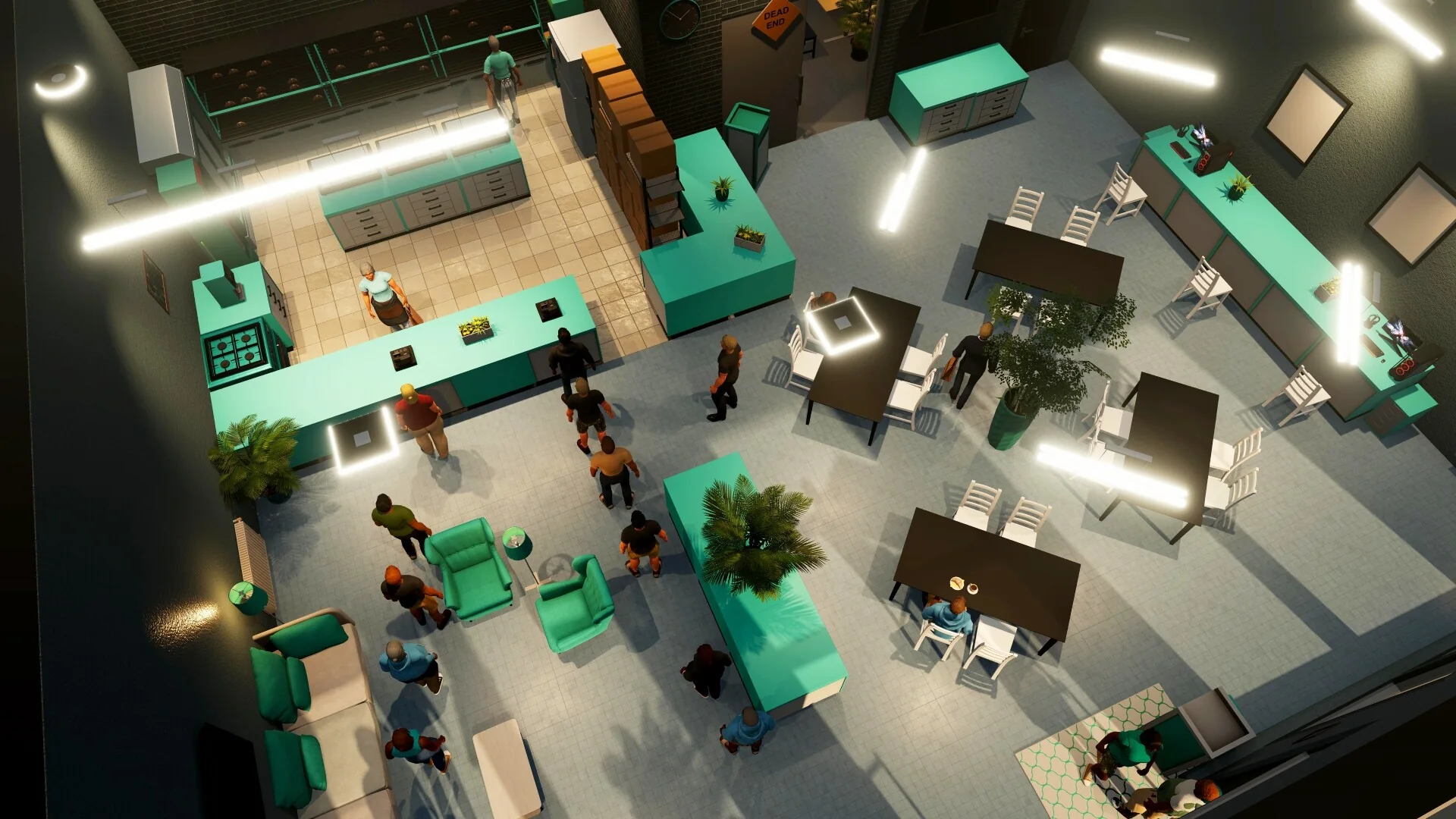
Quick answer
The best way to raise happiness in Big Ambitions is to identify which signal is actually weak before buying upgrades. Check the business information, then inspect customer comfort, hygiene, service quality, working conditions, and employee demands as separate problems. A clean bathroom will not repair a long queue, and a pleasant interior will not replace a missing worker or an empty shelf. Start with the most visible failure, make one affordable correction, and observe the next business cycle. Use the broader happiness guide for the system overview and this page for a repeatable decision route.
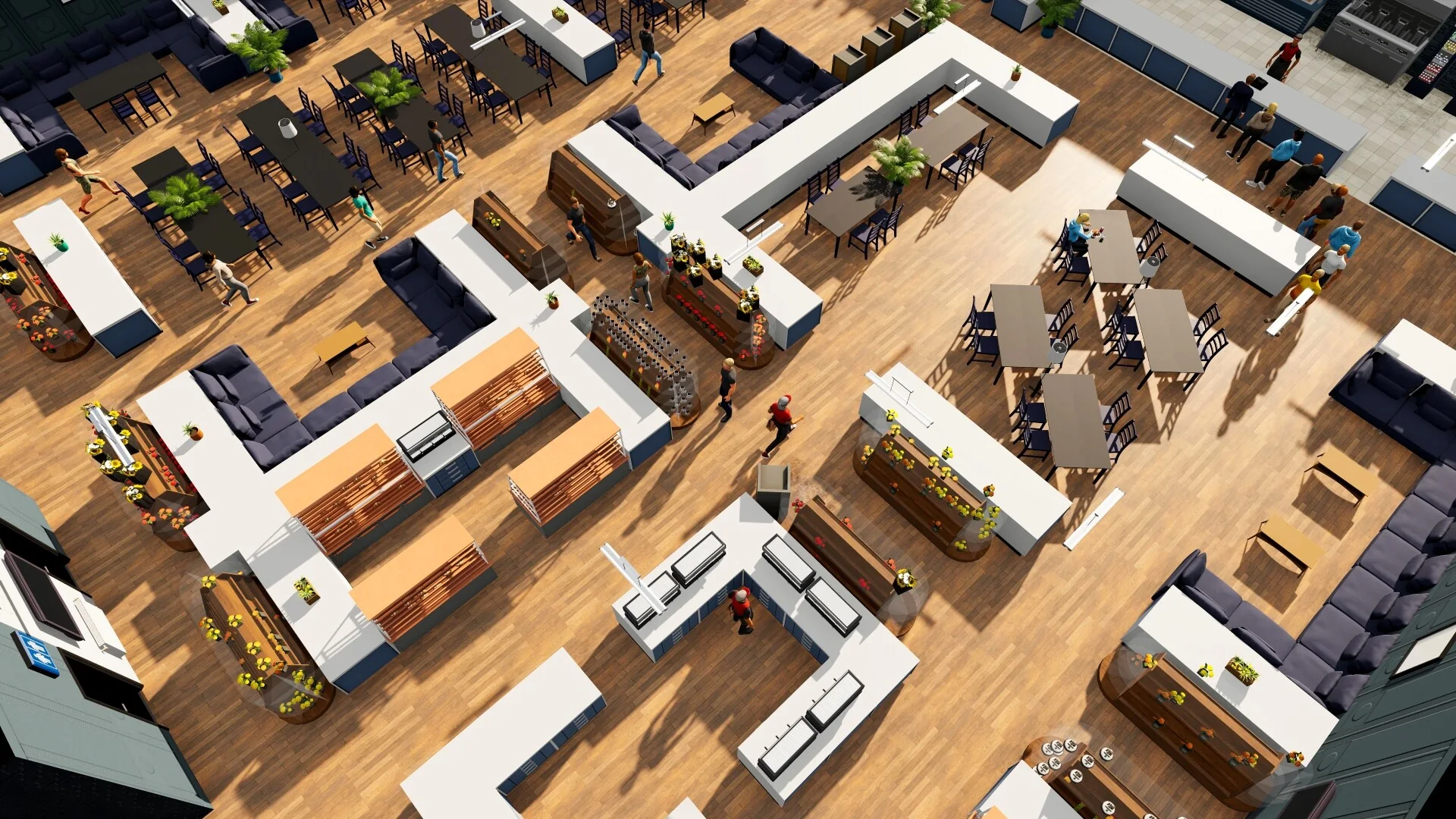
An operating customer area: use your own business panel to identify whether the issue is comfort, hygiene, service, or staffing.
Read the signal before acting
Happiness is an outcome, not a single piece of furniture. When customers leave unhappy, ask whether they waited, could not find what they wanted, lacked a comfort or hygiene option, or encountered poor service. When employees are unhappy, ask whether their needs, schedule, workplace equipment, or workload is the problem. The same store can have a strong interior score and weak employee satisfaction, so do not collapse every red warning into “buy more decorations.”
| Observation | First inspection | Sensible response |
|---|---|---|
| Customers complain or leave quickly | Queue, stock, service point, and pathing | Remove the bottleneck before expanding |
| The room feels dirty or uncomfortable | Bathrooms, cleaning, and access | Add or service the relevant facility |
| Your character's own happiness or needs are low | Open the player's status/needs and identify the low item; low hunger and happiness also drain energy faster | Use the matching available food, rest, hygiene, or leisure action, then recheck the player's status after it completes |
| Staff happiness drops | Employee needs, shifts, and workplace setup | Fix the job before adding customer-facing items |
| The room looks unfinished | Surfaces, light, and layout | Use an interior pass after the function works |
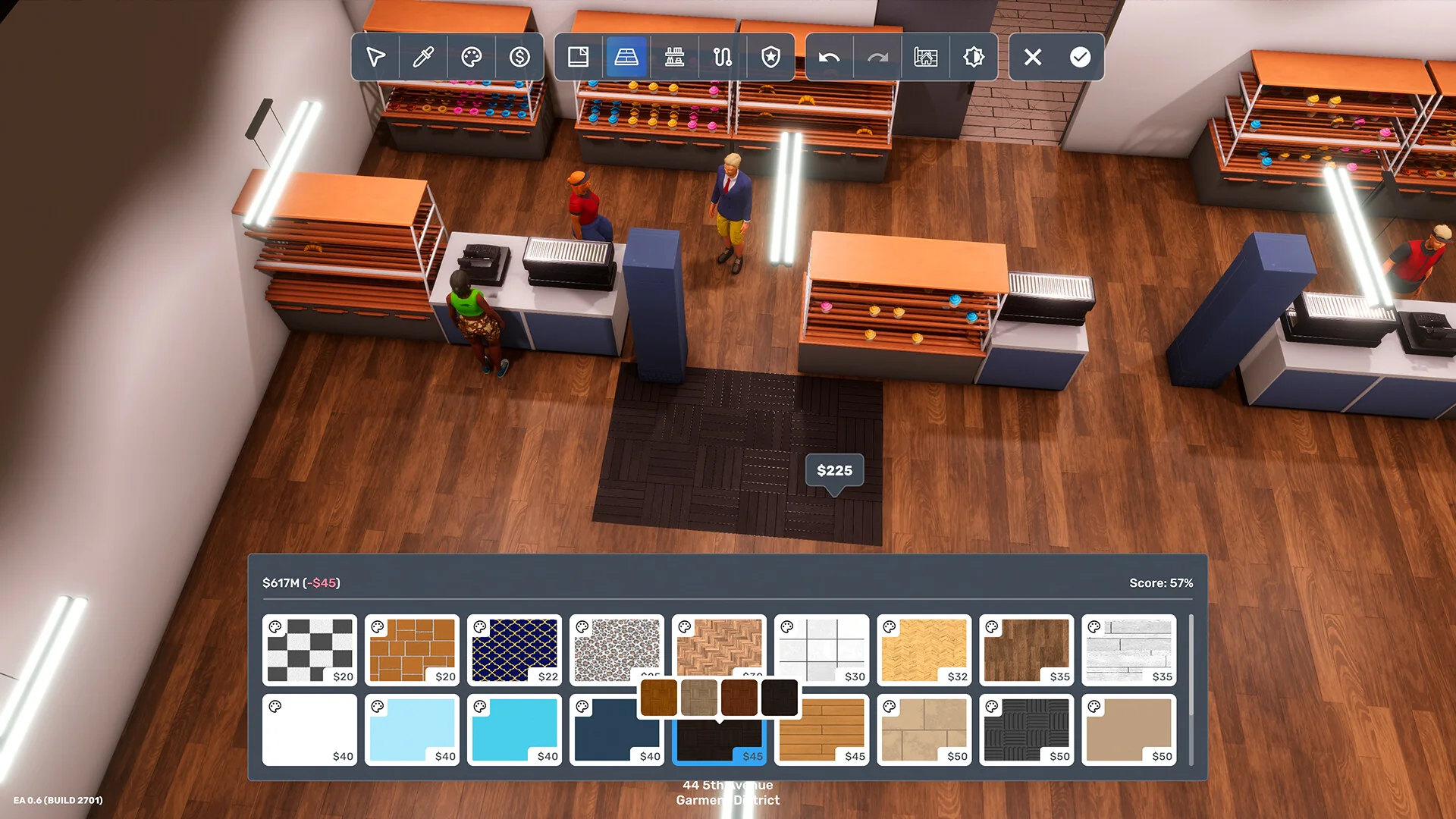
A second view of a customer-facing room: check your live comfort and service indicators instead of treating this layout as a happiness formula.
This classification keeps the most common mistake—solving a service problem with cosmetic spending—from repeating across every branch. If the player-status signal is the one that is low, fix the displayed personal need and confirm the same status changed; do not use customer or employee satisfaction as a proxy. The 1.0 notes recommend keeping personal happiness around half full as a practical routine target, not as a business-profit formula.
A reliable improvement sequence
First stabilize the operation. Stock the products or inputs the business actually sells, ensure staff can reach their stations, and make sure the door, counter, queue, and shelves are not blocked. Second, look at customer-facing comfort. Bathrooms and other facilities only help when they are accessible and appropriate to the business context; simply placing an item in a corner is not proof that the whole happiness system has been solved. Third, improve the room's interior score with walls, floors, lighting, and restrained decoration.
After that, check employees. A profitable store can still underperform if a worker has unmet needs or the schedule is too aggressive. Give the workplace a short observation window after each adjustment. If happiness improves but profit falls sharply, the fix may be too expensive for the current stage; keep the cheaper version and revisit the upgrade after cash flow stabilizes.
Why “best happiness” has no one answer
Players asking for the best happiness setup often mean different things: maximum customer satisfaction, employee retention, a better interior rating, or a comfortable home routine. Those goals overlap, but they are not identical. A small early store needs a low-cost, accessible solution. A late business can afford more facilities, staff coverage, and a stronger interior. Therefore the useful recommendation is a decision path rather than a universal shopping list.
Use the following test: if the issue is visible during one visit, fix access or service first; if it appears after a day of operation, inspect staffing, restocking, cleaning, and schedules; if the indicators remain stable but the room looks poor, use the interior workflow. This mirrors the evidence-supported distinction between game signals and avoids promising an exact happiness threshold without a verified formula.
FAQ and internal route
Does a high interior score guarantee high happiness? No. Treat interior, hygiene, customer experience, and employee satisfaction as related but separate checks.
What is the cheapest first move? Remove a pathing or queue problem, refill the products customers expect, and solve an existing employee need before purchasing decorative upgrades.
Where should I go next? Read employee satisfaction, bathroom stall placement, and interior troubleshooting.
Sources
- Big Ambitions Tips and Tricks for Beginners and Experienced Players for visible gameplay routines and management checks.
- Big Ambitions: How to Customize the Interior of Your Business for the design layer that supports, but does not replace, service checks.
- Big Ambitions official website for current game context.