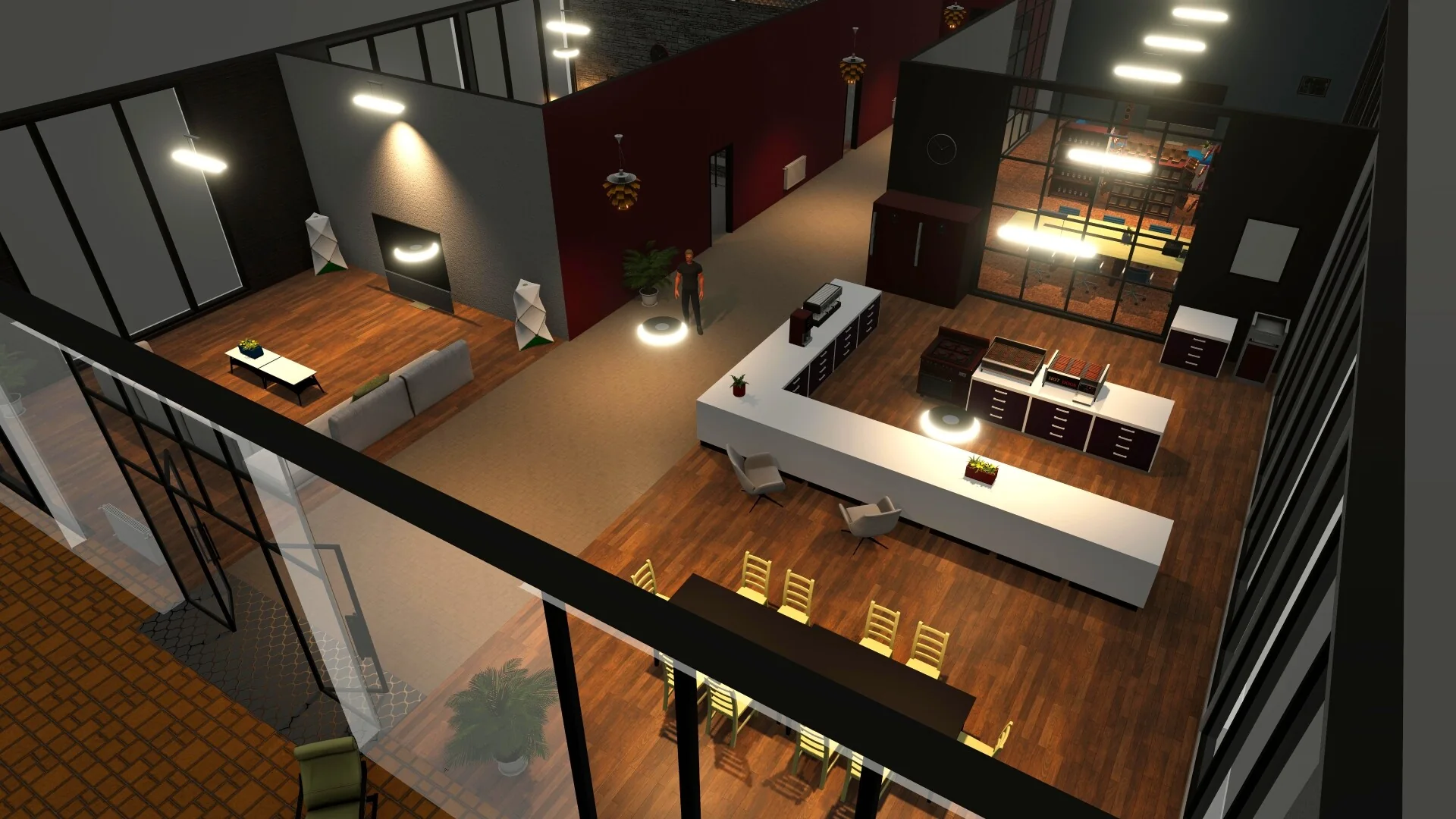
Identify the failure type
| What you notice | Inspect first | Avoid |
|---|---|---|
| Employee cannot perform the job | Station, path, and required fixture | Buying unrelated decoration |
| Employee satisfaction declines over time | Needs, shift length, and workplace routine | Treating one bad hour as a permanent trend |
| Customers wait while staff are present | Capacity, queue, and assignment | Hiring without fixing the route |
| Staff work but profit falls | Wages, hours, and demand | Expanding headcount before measuring volume |
Read the employee's demand and match the fix
Open MyEmployees, select the affected employee, and read the specific demand and its priority. Build 3680 added environmental demands to the MyEmployees filters, making it easier to find workers with those needs. Treat the current employee card as the live requirement; the table below is a diagnosis map, not a substitute for the demand text.
| Demand or signal | First fix to try | Verify it by… |
|---|---|---|
| Required workstation item | Place the named item in the assigned business and connect it to the employee's station | Reopen the employee card and confirm the demand is met; check the employee can reach and use it |
| Health-insurance benefit | Assign the employee to an HR manager with the insurance level named by that demand | Check the employee's benefit/demand status after assignment |
| Clean workplace | Clean the assigned building and keep a workable cleaning routine | Recheck the building cleanliness and the employee's demand after the next update |
| Peaceful work environment | Check the owner's personal happiness because historical developer discussion ties this demand to owner happiness; follow the current demand tooltip | Raise the owner signal only if the tooltip confirms it, then recheck the demand |
| Low satisfaction with no single obvious demand | Check role/skill match, shift length, access, breaks/needs, and the employee's other listed demands one by one | Change one cause, allow the status to update, and compare the same employee's satisfaction trend |
Employees can have multiple demands with different priorities. Resolve the critical unmet demand first, then recheck the remaining list; buying one requested item does not prove every satisfaction issue is fixed.
Build a staff-friendly room
Keep employee paths away from the busiest customer queue where possible. Place the station so a worker can reach it from the back or side, leaving the front route readable. Do not fill every spare tile with decoration. A slightly less decorated room that works smoothly is a better baseline than a beautiful room that forces workers to cross each other's routes. Bathroom and comfort facilities should be reachable without making the whole staff area a detour.
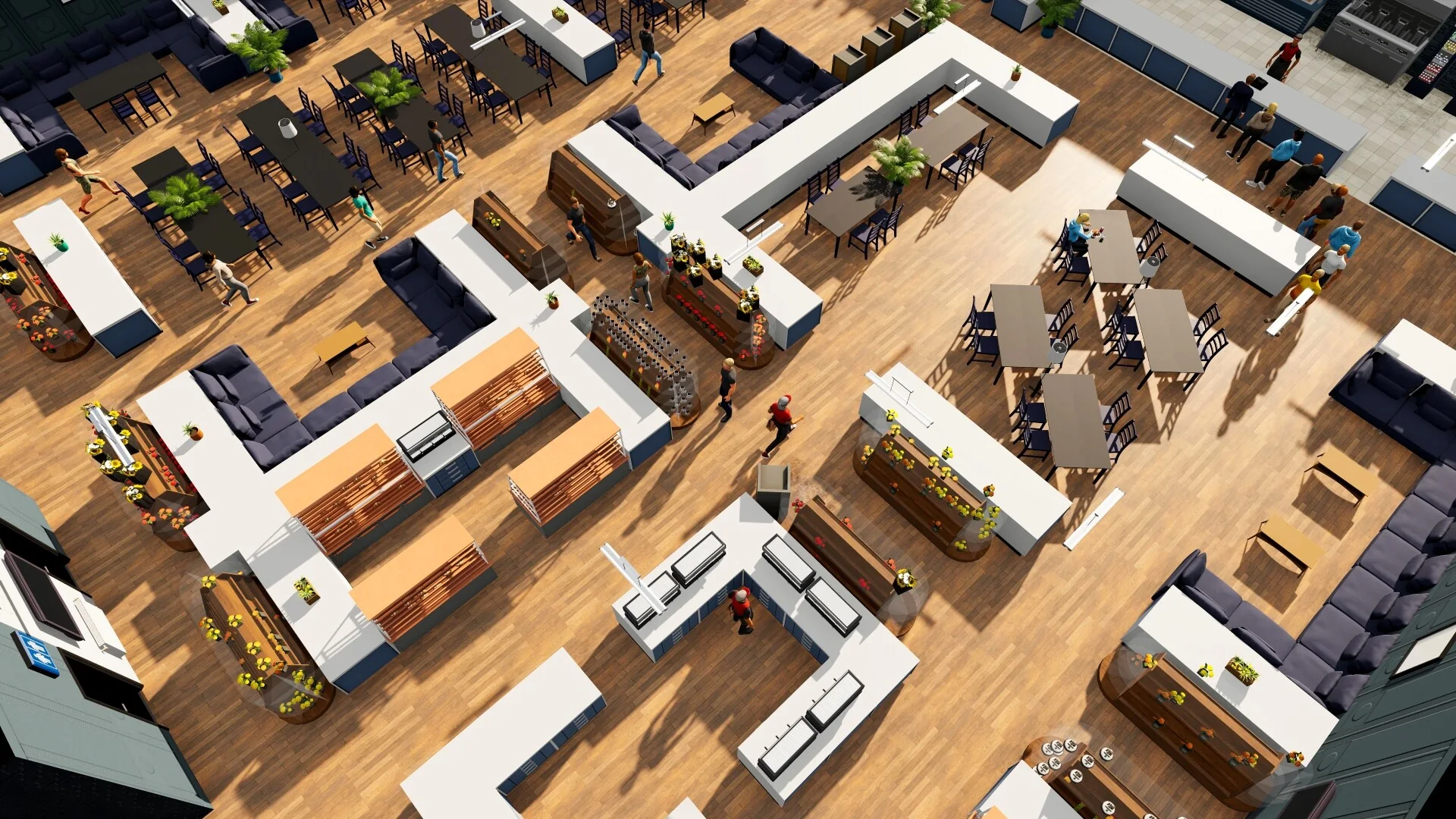
Use the layout as a movement example only; the worker's station, demands, and routes in your own business determine the fix.
Before opening, simulate the shift: where does the employee begin, what do they need, where do they go when stock is low, and how do they return? If the answer contains a blocked corner or long unnecessary loop, move the fixture before hiring more people.
Schedule and capacity checks
If one worker is responsible for service, stocking, and a large customer flow, happiness and sales can fail together. Test a shorter product list or a better assignment before assuming you need a full expansion. When hiring, compare the added wage with the repeated queue or stockout it should solve. Observe a complete business cycle after the change. A single busy moment can make any staffing plan look too small; a quiet day can make a large team look affordable.
The source library includes forum feedback asking for clearer visibility into employee needs and how they interact with other scores. That is a useful design and confusion signal, not proof of a hidden formula. For current play, use the in-game status and a dated observation record.
For player needs, use the happiness guide. For a low room rating, use interior troubleshooting.
Sources
-
How do you create a peaceful work environment? for the developer discussion of the employee demand.
-
Official Build 3680 Patch 2 — employee environmental demands were added to MyEmployees filters.
-
Official forum feedback on interior score, security, and employee needs.
-
FULL RELEASE With UNIQUE Difficulty Scenario for visible operating and staffing context.
-
Big Ambitions official website for current game context.