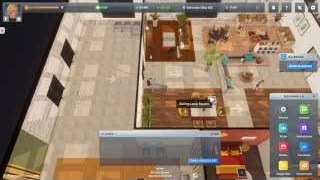
For a standard Story Mode start, choose a Gift Shop. It is a stock-and-checkout business, so it fits the tutorial's wholesale-store steps. In Sandbox, use it as a low-complexity retail default only when gift demand and the first stock order fit your budget; choose a Gym for a service-led start if you can fund its equipment and staffing, or Fast Food if local food demand supports its wider stock and service setup. No candidate is a guaranteed profit winner.
Story Mode exception: the tutorial's first-business steps require a wholesale store, so a Gym opened first may not advance the stock/open-shop objectives. If you still want the Gym, use BizMan → Settings to switch it temporarily to a wholesale type such as Gift Shop, finish those objectives, then switch back and recheck staff schedules and requirements.
Before you sign, estimate cash left = current cash − lease/deposit − required fixtures/equipment − first stock and delivery − wages until the next sales cycle. Keep your personal living-cost reserve separate; if the remainder cannot cover your next restock and operating bills, reduce the opening order or wait. Read current requirements and MarketInsider rather than relying on an old profit ranking.
| Candidate | Why it can fit a first business | Main risk to check first |
|---|---|---|
| Gift Shop | A compact retail loop teaches product choice, display, checkout, and replenishment. Player reports favor it for a low-friction opening; this is not proof of a fixed profit. | Some higher-tier goods may require imports. Confirm which products are currently available to you and budget the first order. |
| Gym | A service-led option if you want to test cover-charge income rather than manage a wide retail assortment. Recent players report different staffing experiences, so use the live requirements screen. | Equipment and any trainer or cleaning coverage can change the setup and wage bill. Do not assume it runs unattended or earns a guaranteed amount. |
| Fast Food Restaurant | A candidate when local food demand is strong and you want several products to test. | More products and service steps can tie up cash in stock and require more replenishment and staff attention. |
| Florist | A focused retail candidate when flower demand is stronger than other local options. | Stock cash can sit in slower flower lines; compare demand and expected unit needs before ordering. |
Check, open, and test
- Compare two candidates using the same inputs: MarketInsider demand and competitors, business requirements, building rent/layout, opening stock, and wages.
- Check the active story objective and the new-business UI. Note required furniture, products, staff, security, environmental demands, and current import eligibility.
- Choose the smallest affordable setup that fits those requirements. Read the displayed delivery/import total before ordering; Build 3680 clarified import eligibility and delivery totals.
- Run the first normal operating cycle and log sales, stockouts, queues, staff coverage, and recurring costs for that business. Compare like-for-like operating periods before changing the setup.
- Make one targeted correction: restock if products ran out, check staffing and customer flow if queues formed, or revisit demand and costs if sales did not cover the ongoing bills. Do not add another product or lease until you can identify what the change is meant to fix.
- Keep the business at its current scale only while it can operate without constant rescue and your remaining cash still covers the next stock order, wages, and bills. If it cannot, reduce the next order or delay expansion and protect your personal living reserve.
Sources
- Official Big Ambitions Steam announcements — Build 3680 import UI and delivery total changes; checked September 26, 2026.
- Your first business of choice — player discussion from November 2025; Gift Shop recommendations and the reminder to check local demand/competition.
- Story objective and first business type — March 2026 player report of an objective mismatch after choosing a Gym; check the active objective in your current build.
- First business for $0 start? — September 2026 player discussion shows differing Gift Shop, Gym, and Fast Food preferences; anecdotal, not a profit ranking.
- Businesses overview — third-party 1.0 reference for business products and required staff; confirm current requirements in F1.
- Buildings database — third-party address, size, capacity, traffic, and parking reference. Verify rent and current availability in your save.
- Location, demand, and pricing guide — third-party comparison method; its calculator explicitly uses assumptions rather than the game's profit formula.