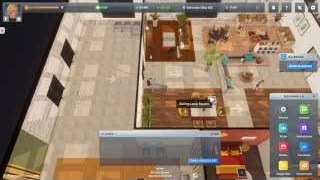
The current community-maintained 1.0 reference lists 21 customer-facing and professional business types. First choose the operating model you want to manage; then use the table to compare each business's earning loop and first constraint. It is a menu guide, not a fixed profit ranking.
Choose the operating model first
- Stocked goods: retail and food businesses need demand-backed products, displays or service fixtures, replenishment, and enough cash for inventory.
- Hourly work: agencies and Hairdresser depend on the right skilled employee, schedule, and paid demand for billable hours.
- Admission or tickets: Gym, Cinema, Theater, and Nightclub need their specific equipment or staff coverage, suitable capacity, and a workable service schedule.
- Support operations: Warehouse, Factory, and Headquarters serve logistics, production, or management needs; add one only when it removes a bottleneck you can identify.
Compare candidate businesses using their current requirements, rent, setup/equipment, inventory, wages, and demand in your save. If none leaves enough cash for an operating cycle, wait and build more reserve.
| Business | Main earning loop | First constraint to check |
|---|---|---|
| Bookstore | Sell books and selected accessories | Product demand, displays, stock, customer service, and retail security |
| Cinema | Sell cinema tickets and concessions | Projectionist and service coverage, venue capacity, and show operation |
| Clothing Store | Sell clothing lines, with jewelry as an additional range | Product demand, display space, replenishment, and security |
| Coffee Shop | Sell coffee, tea, pastries, and other food/drinks | Product mix, counter/equipment setup, stock flow, and service coverage |
| Electronics Store | Sell phones, wearables, and audio products | High-value stock, security requirements, inventory cash, and imports |
| Event Planning Agency | Charge hourly event-planning fees | Event Planner availability, skill, schedule, and billable demand |
| Fast Food Restaurant | Sell prepared meals and drinks | Menu equipment, several product lines, replenishment, and service coverage |
| Florist | Sell cheap and expensive flowers, with selected gift goods | Local flower demand and the cash tied up in replenishment stock |
| Fruit and Vegetable Store | Sell fresh produce and salad | Demand by produce line, freshness/stock flow, display space, and replenishment |
| Gift Shop | Sell gifts and umbrellas, with flowers/drinks/electronics as additions | Accessible products, display space, inventory funding, and security |
| Graphic Designer | Charge hourly design fees | Graphic Designer staffing, skill, schedule, and billable demand |
| Gym | Charge admission and sell selected drinks | Equipment/floor capacity and the live trainer or cleaning requirements |
| Hairdresser | Charge for hair services and sell hair-care products | Hair Stylist roles, service capacity, skills, and schedules |
| Jewelry Store | Sell jewelry and selected smartwatches | Expensive inventory, capital, and security requirements |
| Law Firm | Charge hourly lawyer fees | Lawyer availability, skill, schedule, and billable demand |
| Liquor Store | Sell beer, wine, spirits, and tobacco goods | Product demand, the listed product range, security, and replenishment |
| Nightclub | Earn cover charges and drink sales | DJ/customer-service/cleaning shifts, opening hours, and visitor capacity |
| Supermarket | Sell fresh/frozen goods, drinks, and a broad grocery range | Large assortment, storage, equipment, purchasing cash, and frequent stock control |
| Theater | Sell tickets and concessions | Actors and stage crew, show operation, service coverage, and venue fit |
| Travel Agency | Charge hourly travel-consultant fees | Travel Agent availability, skill, schedule, and billable demand |
| Web Development Agency | Charge hourly programming fees | Programmer availability, skill, schedule, and billable demand |
The Warehouse, Factory, and Headquarters are support operations rather than customer-facing business types: warehouses store and route goods, factories turn inputs into output, and headquarters centralizes management roles. Add one only when the corresponding logistics, production, or management bottleneck justifies its facility and wage costs.
Use the 21 business rows to identify a model, then confirm whether that specific candidate is affordable in your save.
Use F1 and the new-business requirements as the final setup list for your current save. The table is a community 1.0 reference; verify exact requirements and import eligibility in the setup UI. Build 3680 clarified import eligibility and added environmental demands to MyEmployees filters.
Choose the next page by your decision: pick a first business, decide when to expand, compare properties, or test product profit.
Sources
- Official Big Ambitions announcements — Build 3680 UI and employee filter changes.
- Big Ambitions on Steam — the game lists shop, service, and company-building systems.
- Businesses overview — community-maintained 1.0 reference listing 21 business types, product categories, and required staff; checked September 26, 2026.